
Köhler, Felix - CAP 44
MBK2910: A Novel Drug for Chronic Kidney Disease

Dr. Felix Köhler
Dept. II of Internal Medicine
CMMC - PI - CAP 44
CMMC - Co-PI - C 12
show more…
Dept. II of Internal Medicine
Kerpener Str. 62
50937 Cologne
Introduction
As a clinician-scientist, I am fascinated by the innovation that takes place at the bedside, where clinical questions are brought into the laboratory and the clinical potential of fundamental findings is translated into patient care. This interdisciplinarity between bench and bedside is key to my research group, when setting-up accompanying clinical trials to recapitulate research findings we observed in animal models. The immense potential that is diet-induced kidney protection is an important example in this context. Based on our interventional, randomized-controlled clinical trial in the setting of living kidney donation, we were able to recapitulate the underlying molecular mechanisms of diet-induced organ protection in human kidney samples of kidney donors consuming beneficial diets.
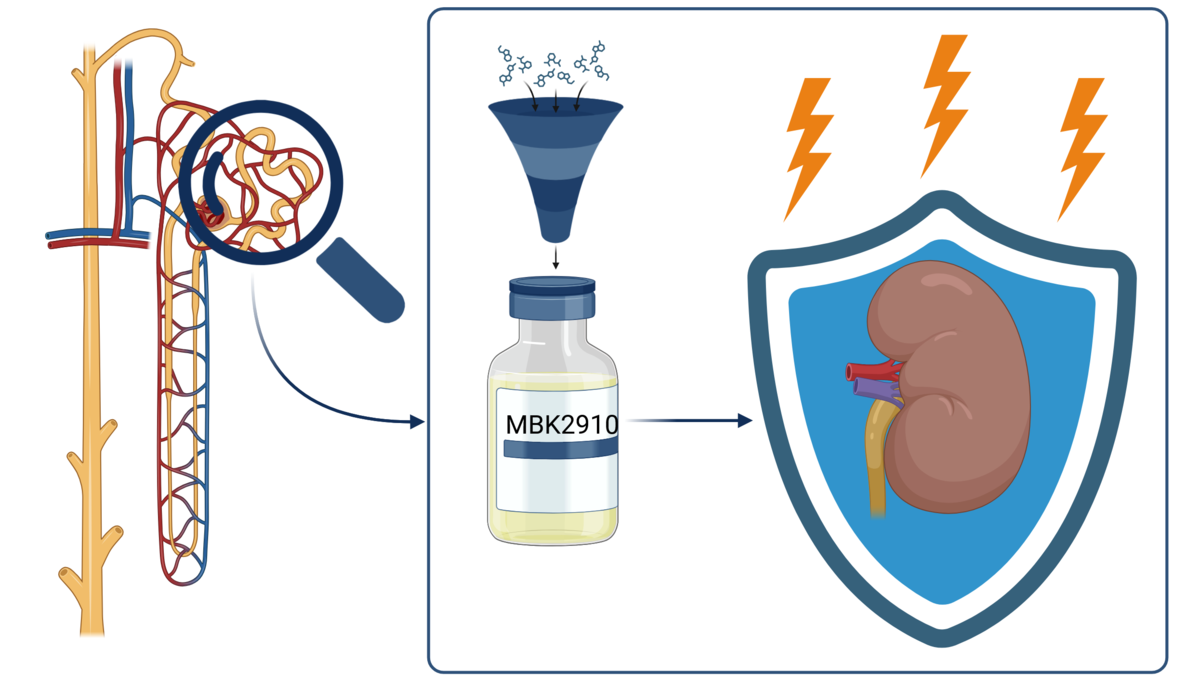
MBK2910 is the underlying molecular mediator of kidney protection and promises to be a novel pharmacotherapy for kidney diseases due to its unique mode of action in sulfur metabolism. Triggered by this novelty, inventive activity, and industrial applicability in medicine, the University of Cologne has registered MBK2910 as a pharmacotherapy for a patent.
To pave the way for the further translation of this immense potential that is MBK2910 as a novel pharmacotherapy for our patients, it is now key to head back to the laboratory bench and examine its efficacy, safety, and tolerability paired with its pharmacodynamics in animal models of kidney diseases. This is an important pre-requisite for the preparation of upcoming clinical trials.
Figure 1
Aims
Chronic kidney disease (CKD) is a frequent and life-threatening disease with limited therapeutic approaches. Oxidative stress and ferroptosis are the key drivers of loss of kidney function. We found that diet-induced kidney protection is mediated through sulfur metabolism. MBK2910 is taken up via a known transporter, renders cells ROS resistant, and promises to mimic the well-known diet-induced effects in kidney protection. MBK2910 is stable at room temperature and at neutral pH, both supporting its clinical use. Being an endogenous molecule with limited side-effects, MBK2910 may add a novel therapeutic tool in kidney disease and beyond. Conclusively, the project targets the following aims:
- In-vivo determination of the therapeutic window and organ distribution of MBK2910.
- Efficacy, safety and tolerability analyses of MBK2910-treatment in rodent CKD models.
Clinical relevance
A pivotal problem in aging-associated kidney disease is CKD. Currently, nearly 100 million Europeans are affected by CKD, and it is projected that CKD will be the fourth leading cause of death worldwide by 2040. Despite decades of (pre) clinical drug development, tailored pharmacotherapies for CKD in the clinic are lagging behind. Renal replacement therapies are often necessary and cause substantial morbidity and mortality for our patients. MBK2910 renders cells ROS resistant and limits ferroptotic cell death in the kidney. Ferroptosis, in turn, is a key driver of CKD. Thus, MBK2910 may be substantial addition to our therapeutic armamentarium in kidney diseases and even beyond.
Lab / Research Website
More information here: Nephrolab Cologne
Felix Köhler is also a co-principal investigator on the individual project C 12 (PI Günter Schwarz).
Affiliations - Felix Köhler
Publications generated with CMMC affiliations
2026
Publications with CMMC affiliations will be listed as soon as available