
Who are ... Débora Trentini and Tom J. Oldfield?
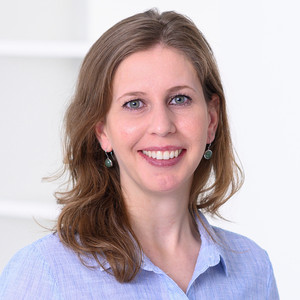
“Understanding the mechanisms that govern cellular function never fails to amaze me. What I enjoy most about research is the oportunity to combine both analytical thinking and creativity in order to discover something truly new. I find it especially rewarding to mentor the new generation of scientists and see their curiosity and enthusiasm driving our work forward.”
Débora B. Trentini Schmidt
Dr. Débora Broch Trentini Schmidt is a molecular biologist and Junior Research Group Leader at the Center for Molecular Medicine Cologne (CMMC), University of Cologne, where she heads the Laboratory of Protein Quality Control and Stress Response. She is also an Associated Principal Investigator in the Cluster of Excellence Cellular Stress Responses in Aging-Associated Diseases (CECAD). Her research focuses on the molecular mechanisms that maintain proteome homeostasis (proteostasis), with particular emphasis on ribosome-associated protein quality control (RQC), transmembrane protein biogenesis, and cellular responses to proteotoxic stress.
Dr. Trentini Schmidt obtained her Bachelor's degree in Biomedicine and her Master's degree in Cellular and Molecular Biology from the Federal University of Rio Grande do Sul, Brazil, before completing her PhD at the Institute of Molecular Pathology (IMP) in Vienna under the supervision of Dr. Tim Clausen. Following postdoctoral research at the IMP and later at the Max Planck Institute for Biochemistry in Munich in the laboratory of Prof. Dr. F. Ulrich Hartl, she established her independent research group at the CMMC in 2020.
Her research aims to uncover how cells preserve protein homeostasis during normal physiology and under conditions of stress. In particular, her laboratory investigates how ribosomes function as platforms for protein quality control and stress signaling. By integrating biochemical, fluorescence-based, and advanced mass spectrometry approaches, her group seeks to define the molecular principles governing co-translational protein surveillance and degradation. A distinctive aspect of their work is the characterization of a newly emerging class of RQC substrates uncovered through unbiased proteomic analyses. This line of inquiry allows them to pinpoint both shared and unique features of surveillance mechanisms across different forms of ribosome‑translation perturbation.
Dr. Trentini Schmidt has made significant contributions to the field of proteostasis, including seminal work demonstrating the mechanism of protein targeting to ClpCP proteases in Gram-positive bacteria, and the role of ribosome-associated quality control in major histocompatibility complex (MHC) class I antigen presentation. Her research has been recognized through prestigious awards and fellowships, including a Marie Skłodowska-Curie Individual Fellowship, the Max Planck Institute Junior Scientists' Publication Award, and the Peter and Traudl Engelhorn Foundation Research Prize.
Overall, Dr. Trentini Schmidt's work bridges fundamental cell biology and translational biomedical research by elucidating the mechanisms that safeguard protein quality and cellular homeostasis. Her discoveries provide important insights into fundamental cellular processes that prevent neurodegeneration and systemic health decline during ageing, laying the foundation for future therapeutic strategies.
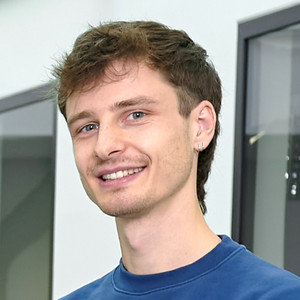
„Isn’t it fascinating how robustly cells manage to do their thing? Over and over, I am intrigued how even the seemingly simple processes are facilitated by complex and intricately regulated mechanisms. Contributing bits and pieces to understand this complexity brings me joy.”
Tom J. Oldfield
Dr. Tom J. Oldfield is a pharmacist and biochemist whose work explores how cells build, monitor, and maintain their proteins. With a particular interest in protein biogenesis, proteostasis, and cellular stress responses, he is currently a postdoctoral researcher at the Center for Biochemistry at the University of Cologne. He works in Dr. Emma Fenech’s laboratory and is affiliated with the Center for Molecular Medicine Cologne (CMMC).
Dr. Oldfield earned his PhD in the Laboratory of Protein Quality Control and Stress Response led by Dr. Débora Broch Trentini Schmidt at the CMMC. During his doctoral research, he investigated translation‑coupled protein quality control at the endoplasmic reticulum (ER), focusing especially on transmembrane proteins and how cells manage difficult‑to‑translate sequences. His first‑author study, Principles of ribosome‑associated protein quality control during the synthesis of CFTR, revealed how aberrant translation of the cystic fibrosis transmembrane conductance regulator engages ribosome‑associated quality control pathways. This work contributes to a growing understanding of how cells detect and eliminate defective nascent polypeptides before they accumulate and disrupt cellular homeostasis.
Recently, Dr. Oldfield joined Dr. Emma Fenech’s Lab at the Center for Biochemistry at the University of Cologne as a postdoctoral researcher, where he continues his work in the field of protein quality control and proteostasis. The Fenech laboratory investigates molecular mechanisms that maintain protein homeostasis within the ER, with a particular interest in how this dynamic organelle maintains its functionality even in challenging times. To contribute to this, Dr. Oldfield is developing tools to map protein interaction networks aiming to identify stable and transient cofactors and clients of ER proteins.
Across his early career, Dr. Oldfield’s research seeks to advance our understanding of the molecular mechanisms that maintain protein homeostasis during protein synthesis and maturation. By dissecting the pathways that recognize and eliminate defective proteins at early stages of their biogenesis, he contributes to a deeper understanding of proteostasis and its implications for diseases associated with protein misfolding and impaired quality control.