

Sara A. Wickström | Research, Recognition & Publications

From Mechanical Forces to Gene Regulation
A central achievement of Sara A. Wickström’s research has been demonstrating that physical forces do more than influence cell shape and movement: they can directly affect the organization of chromatin and the regulation of gene expression. Her laboratory showed that mechanical signals transmitted through cellular structures can alter chromatin organization and Polycomb-mediated gene silencing during cell differentiation. These findings provided a mechanistic link between the physical environment of a cell and the molecular programs governing cellular identity. In subsequent work, her team discovered that cells can protect their genomes from mechanical stress through adaptive changes in nuclear mechanics. By modifying heterochromatin organization, cells can temporarily soften their nuclei and reduce the risk of mechanically induced DNA damage.
Together, these discoveries have expanded our understanding of how physical forces influence cellular identity, genome integrity, and tissue homeostasis.
Connecting Stem Cell Biology, Tissue Architecture, and Disease
Sara A. Wickström’s research extends beyond individual cells to investigate how mechanical forces coordinate collective cell behavior and tissue architecture. Using interdisciplinary approaches that integrate cell biology, advanced imaging, biophysics, genomics, and computational modeling, her laboratory investigates how tissue stem cells respond to their microenvironment, maintain regenerative capacity, and coordinate tissue organization. Her studies have revealed how changes in tissue mechanics can influence stem cell function during aging and how mechanical interactions across cellular and tissue compartments contribute to cell fate decisions and tissue formation.
More recently, her research has extended these principles to cancer biology, demonstrating how quantitative analysis of tumor architecture and interactions between cancer cells and surrounding stromal cells can reveal clinically relevant features of disease. These findings have implications for understanding tissue regeneration, fibrosis, and tumor progression. They also provide a foundation for investigating whether pathological mechanical states and their associated gene-regulatory programs could become targets for future diagnostic or therapeutic strategies.
International Recognition: The 2026 Körber European Science Prize
In September 2026, Sara A. Wickström received the Körber European Science Prize, one of Europe’s major scientific distinctions, endowed with €1 million. The award recognizes her pioneering discoveries demonstrating how mechanical forces regulate stem cell fate through molecular signaling and epigenetic mechanisms. Her achievements have also been recognized with the Binder Innovation Prize of the German Society for Cell Biology (2017), the A. I. Virtanen Research Prize (2023), and the Innovation in Research Award of the American Society for Cell Biology (2023). She was elected to the European Molecular Biology Organization (EMBO) in 2020.
A Scientific Career with Strong Ties to Cologne
Sara A. Wickström earned her medical degree and Ph.D. at the University of Helsinki before pursuing postdoctoral research at the Max Planck Institute of Biochemistry in Martinsried, Germany. In 2010, she established an independent research group at the Max Planck Institute for Biology of Ageing in Cologne, where she conducted research for approximately a decade. She subsequently held a professorship in cell and developmental biology at the University of Helsinki before becoming a Director at the Max Planck Institute for Molecular Biomedicine in Münster in 2021.
Her longstanding scientific connections to Cologne make her participation as a keynote lecturer at the CMMC Annual Retreat 2027 particularly meaningful.
Advancing the Frontiers of Regenerative and Molecular Medicine
Wickström’s work exemplifies the power of interdisciplinary research to address fundamental questions in biomedicine. By integrating molecular mechanisms with the physical properties of cells and tissues, her research has established new conceptual and experimental approaches to understanding how tissues develop, maintain their integrity, and respond to injury. Her current research also explores whether cells retain a molecular memory of mechanical stress and tissue damage—an emerging question with potential implications for chronic wounds, fibrosis, and age-associated tissue dysfunction.
Selected Scientific References
- Le HQ et al. (2016). Mechanical regulation of transcription controls Polycomb-mediated gene silencing during lineage commitment. Nature Cell Biology 18, 864–875. https://www.nature.com/articles/ncb3387
- Nava MM et al. (2020). Heterochromatin-driven nuclear softening protects the genome against mechanical stress-induced damage. Cell 181, 800–817.e22. https://pubmed.ncbi.nlm.nih.gov/32302590/
- Koester J et al. (2021). Niche stiffening compromises stem cell potential during aging by reducing chromatin accessibility at bivalent promoters. Nature Cell Biology. https://doi.org/10.1038/s41556-021-00705-x
- Punovuori K et al. (2024). Multiparameter imaging reveals clinically relevant cancer cell–stroma interaction dynamics in head and neck cancer. Cell 187, 7267–7284. https://pubmed.ncbi.nlm.nih.gov/?term=Multiparameter+imaging+reveals+clinically+relevant+cancer+cell-stroma+interaction+dynamics
- McCreery KP et al. (2025). Mechano-osmotic signals control chromatin state and fate transitions in pluripotent stem cells. Nature Cell Biology 27, 1757–1770. https://doi.org/10.1038/s41556-025-01767-x
Official Biographical and Award Sources
Sara A. Wickström - Körber Prize Winner 2026: The Hidden Senses of Cells
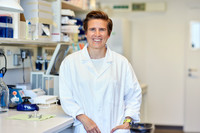
Finnish physician and cell biologist Sara A. Wickström has been awarded the €1 million Körber European Science Prize. Check out the video.