
Who is ... Remzi Onur Eren
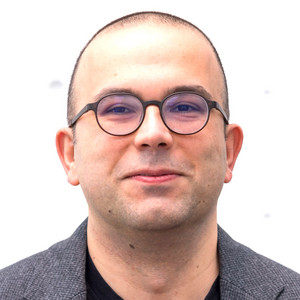
Research interest: How inflammatory signaling and regulated cell death are coordinated to maintain tissue homeostasis – and how disruption of this balance contributes to inflammatory and age-associated diseases.
Dr. Remzi Onur Eren is a molecular biologist and independent researcher at the Cologne Excellence Cluster on Cellular Stress Responses in Aging-Associated Diseases (CECAD) and the Institute for Genetics at the University of Cologne. His research explores how inflammatory signaling and regulated cell death are coordinated to maintain tissue homeostasis – and how disruption of this balance contributes to inflammatory and age-associated diseases.
Research Focus
A central theme of Eren’s research is the interplay between inflammation, cell death, and tissue homeostasis. His work focuses particularly on the non-canonical IKK-related kinases TANK-binding kinase 1 (TBK1) and IκB kinase ε (IKKε), which regulate innate immune signaling, type I interferon responses, and cell-fate decisions.
Eren investigates how these kinases control inflammatory cell death and how their functions differ between tissues and disease contexts. His research has revealed an important role for TBK1 and IKKε in restricting RIPK1-dependent and -independent inflammatory processes, demonstrating how closely cell-death regulation and immune signaling are interconnected in maintaining tissue integrity.
More recently, his work has expanded toward the nervous system. Loss-of-function variants in TBK1 have been associated with amyotrophic lateral sclerosis and frontotemporal dementia, suggesting an important role for balanced TBK1 activity in neuronal homeostasis. Eren therefore investigates how altered TBK1 and IKKε signaling affects neuronal function and how its dysregulation may contribute to neuroinflammation and neurodegeneration.
Read more ...
Selected Publications & Scientific Contributions
A major contribution to this research was Eren’s first-author study published in Nature Communications in 2024. Together with colleagues at the University of Cologne, he demonstrated that IKKε can compensate for loss of TBK1 kinase activity and that the two kinases cooperate to prevent inflammatory cell death and systemic inflammation.
The study further revealed that the functions of TBK1 and IKKε are tissue-dependent: while their activity was essential for preventing cell death and inflammation in the intestine, it was dispensable for homeostasis in other tissues examined. These findings provided new insights into the context-dependent functions of the two kinases and established an important foundation for Eren’s current research.
Building on this work, he combines genetic disease models with molecular profiling, histological analyses, and functional approaches to investigate how TBK1 and IKKε regulate inflammation and cell death across different tissues. His current research extends these concepts to neuronal homeostasis and seeks to define how balanced kinase activity may protect the nervous system during aging and disease.
Scientific Career & Recognition
Eren studied Molecular Biology and Genetics at Bilkent University in Turkey before moving to the University of Lausanne, where he completed an MSc in Medical Biology and subsequently a PhD in Biochemistry. His doctoral research investigated the role of microRNAs during Leishmania infection.
Following a postdoctoral position at the University of Lausanne, Eren joined the group of Prof. Manolis Pasparakis at the Institute for Genetics and CECAD at the University of Cologne in 2017. Here, he shifted his research focus toward the regulation of cell death in tissue homeostasis, inflammation, and autoinflammatory disease.
His scientific work has received several distinctions. In 2017, he was awarded the Prix d’Excellence du Jeune Chercheur (Young Investigator Excellence Award) by the University of Lausanne and Lausanne University Hospital (CHUV). From 2018 to 2020, he was supported by an Alexander von Humboldt Postdoctoral Fellowship for his research on the role of TBK1 in tissue homeostasis.
Since 2025, Eren has been an independent DFG-funded researcher at CECAD, where he leads a project investigating the molecular mechanisms linking TBK1 and IKKε signaling to inflammation and tissue homeostasis.
Current Research at the CMMC
In 2026, Eren joined the CMMC as a Career Advancement Program (CAP) Group Leader. His CAP 43 research program, “TBK1 and IKKε in Inflammation and Cell Death: From Mechanism to Therapy,” builds on his previous discoveries to investigate how these kinases contribute to tissue and neuronal homeostasis during aging and disease.
By integrating genetic models with molecular profiling, histological analyses, and neurophysiological approaches, his group seeks to understand how balanced TBK1 and IKKε signaling supports neuronal function and how its disruption may promote neuroinflammation and tissue degeneration.
Ultimately, Eren aims to define the context-dependent functions of these signaling pathways and identify molecular mechanisms that could inform more selective therapeutic strategies for inflammatory and neurodegenerative disorders.