
Who are ...
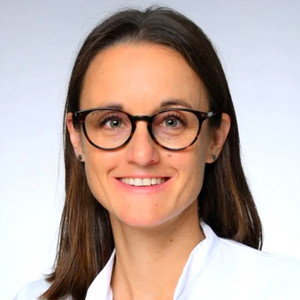

PD Dr. Carolina Rosswog
“What drives me in research is curiosity: exploring new questions and translating scientific insights into better care for children with cancer.”
About
PD Dr. Carolina Rosswog, CMMC CAP Awardee 2026,is a pediatric oncologist, clinician-scientist, and research group leader at the Department of Pediatric Oncology and Hematology and the Department of Experimental Pediatric Oncology at University Hospital Cologne. Her research focuses on the molecular evolution of neuroblastoma, with the overarching goal of understanding the mechanisms that drive tumor initiation, progression, therapy resistance, and relapse - and translating these insights into improved risk stratification and more individualized treatment strategies for children with the disease.
Read more
Research Focus
A central theme of Carolina Rosswog’s research is the remarkable biological and clinical heterogeneity of neuroblastoma. While some tumors regress spontaneously or respond well to treatment, others progress aggressively, develop therapy resistance, or relapse despite intensive multimodal therapy. Understanding the molecular mechanisms underlying these divergent trajectories is essential for predicting disease course and tailoring treatment to individual patients.
Carolina Rosswog investigates how neuroblastoma evolves over time - from early tumor development through treatment to progression and relapse. By studying molecular alterations in longitudinal patient samples, her group seeks to reconstruct the evolutionary trajectories of individual tumors and determine how clonal selection and tumor heterogeneity influence treatment response.
A particular focus of her research is on telomere maintenance mechanisms. These molecular processes enable tumor cells to preserve their telomeres and maintain unlimited proliferative capacity and have emerged as powerful biomarkers of clinical outcome in neuroblastoma. Carolina Rosswog aims to translate this biological knowledge into clinically applicable tools for molecular risk stratification and precision medicine.
Selected Publications & Scientific Contributions
Carolina Rosswog’s research has contributed to a more precise molecular characterization of neuroblastoma and its evolution during the course of disease. In a first-author study published in the British Journalof Cancer in 2023, she and colleagues systematically investigated genomic alterations of the ALK oncogene in primary and relapsed neuroblastoma. The study provided insights into the occurrence and evolution of ALK alterations during disease progression and highlighted the importance of longitudinal molecular characterization for identifying potentially actionable alterations
In another study published in the Nature Genetics, she and colleagues systematically investigated highly complex genomic amplification patterns in neuroblastoma and other cancers, termed “seismic amplification”. The study provided insights into the evolution of these genomic alterations, which are associated with high-risk disease and affect oncogenes such as MYCN, CDK4 and MDM2.
Another major focus of her work is the prognostic impact of telomere maintenance mechanisms. Together with colleagues in Cologne, Carolina Rosswog contributed to the development and validation of molecular approaches that distinguish telomerase activation and alternative lengthening of telomeres from tumors without detectable telomere maintenance. This work provides an important methodological foundation for implementing telomere biology into clinically applicable molecular risk stratification.
Together, these studies illustrate the translational direction of Carolina Rosswog’s research: following molecular changes throughout the course of neuroblastoma, identifying biologically meaningful biomarkers, and determining how these insights can be used to improve diagnosis, risk assessment, and treatment.
Scientific Career & Recognition
Carolina Rosswog studied medicine at Philipps University Marburg and the University of Barcelona, with additional clinical training in Quito and Bern. Following graduation, she spent her first year working in Bern, Switzerland, before starting her clinical and scientific career in pediatric oncology and hematology and joining the Department of Experimental Pediatric Oncology at University Hospital Cologne in 2012.
Since then, she has combined patient care with experimental and translational neuroblastoma research. She was supported through a Clinician Scientist Fellowships at University Hospital Cologne, allowing her to dedicate time to clinical work and research. In 2024, she completed her habilitation and established her own research group in Experimental Pediatric Oncology.
Since 2025, Rosswog has been a Senior Consultant in Pediatric Oncology and Hematology and a fellow of the Advanced Clinician Scientist Program of the Faculty of Medicine at the University of Cologne, providing protected research time alongside her clinical responsibilities.
Her scientific work has received several distinctions, including the Kind-Philipp Award for Pediatric Oncology Research, the Erna-Brunner Award, and the Adalbert Czerny Award.
Current Research & Funding
In 2026, Carolina Rosswog joined the CMMC as a Career Advancement Program (CAP) Group Leader. Her CAP 46 research program, “Deciphering Neuroblastoma Evolution: Mapping Molecular Trajectories from Disease Initiation to Progression and Translating Insights into Clinical Practice,” brings together two complementary research directions: understanding clonal evolution throughout the entire course of neuroblastoma and translating molecular discoveries into improved risk stratification and precision medicine.
Her research has recently received additional support from the Marga and Walter Boll Foundation, which awarded Rosswog for the project “Telomere Maintenance Mechanisms as Prognostic and Predictive Markers in Neuroblastoma: Establishing Molecular Risk Stratification.”
The project aims to validate telomere maintenance mechanisms as biomarkers in a large patient cohort and determine whether tumors with different telomere maintenance profiles respond differently to currently available therapies.
By integrating molecular tumor evolution, biomarker development, and clinical research, Rosswog aims to advance precision medicine for neuroblastoma – improving treatment for children with high-risk disease while reducing unnecessary therapy and its potential long-term consequences for patients with more favorable disease.
Prof. Dr. Matthias Fischer
“I am interested in elucidating the molecular principles of pediatric tumor development and progression, and how such information can be used to improve clinical management of children with cancer. Due to its remarkable biological and clinical heterogeneity, neuroblastoma is a perfect subject to investigate these scientific questions.”
About
Prof. Dr. Matthias Fischer is a pediatric oncologist, physician-scientist, and Head of Experimental Pediatric Oncology at the Department of Pediatrics and Adolescent Medicine at University Hospital Cologne. He is also a Principal Investigator at the Center for Molecular Medicine Cologne (CMMC). His research focuses on understanding the molecular mechanisms underlying neuroblastoma, one of the most common solid tumors in children, with the overarching goal of translating biological discoveries into improved risk assessment and more effective, individualized treatment strategies.
Read more
Research Focus
A central theme of Matthias Fischer’s research is the remarkable clinical heterogeneity of neuroblastoma. While some tumors regress spontaneously or differentiate into benign lesions, others progress aggressively despite intensive treatment. Understanding the molecular mechanisms responsible for these contrasting outcomes is essential for identifying children who require intensive therapy and those who may benefit from less aggressive treatment.
Matthias Fischer and his team investigate the genetic and molecular characteristics that determine neuroblastoma development, progression, and spontaneous regression. A particular focus is on telomere maintenance mechanisms, which enable cancer cells to maintain their chromosome ends and sustain uncontrolled proliferation.
His research has demonstrated that telomere maintenance is a major determinant of neuroblastoma aggressiveness. By integrating genomic profiling, molecular analyses, and clinical data, his group seeks to establish biologically informed tumor classifications that improve prognostic accuracy and identify potential therapeutic vulnerabilities.
Selected Publications & Scientific Contributions
Matthias Fischer has made major contributions to the molecular characterization and classification of neuroblastoma.
In a landmark study published in Science in 2018, entitled “A mechanistic classification of clinical phenotypes in neuroblastoma,”Matthias Fischer and colleagues demonstrated that the presence or absence of telomere maintenance mechanisms is closely associated with the clinical behavior of neuroblastoma. By analyzing genomic alterations and telomere maintenance in large patient cohorts, the researchers identified distinct biological subgroups with substantially different clinical outcomes. Tumors lacking telomere maintenance mechanisms were associated with an excellent prognosis, whereas tumors with active telomere maintenance showed a significantly greater risk of aggressive progression. The study established a molecular framework for understanding the diverse clinical courses of neuroblastoma and provided an important foundation for more precise risk stratification.
Subsequent research has further characterized telomerase activation and alternative lengthening of telomeres as distinct molecular mechanisms in high-risk neuroblastoma. These findings have helped establish telomere biology as a central component of neuroblastoma classification and a promising area for the development of targeted therapeutic strategies.
Beyond these discoveries, Fischer has contributed to international collaborative efforts to improve molecular diagnostics, prognostic classification, and treatment stratification in pediatric oncology.
Scientific Career & Recognition
Matthias Fischer studied medicine at the University of Cologne, where he completed his medical doctorate in 2002. Following his clinical training in pediatrics and pediatric oncology at University Hospital Cologne, he established an independent research program investigating the molecular basis of neuroblastoma.
Over the course of his career, he has combined clinical expertise with experimental and translational cancer research, helping to advance the integration of molecular tumor biology into pediatric oncology.
His scientific achievements have been recognized through several national awards, including the Gerhard Domagk Award for Cancer Research (2016), the Adalbert Czerny Award of the German Society of Pediatrics and Adolescent Medicine (2018), and the Fritz Lampert Award (2019).
In 2025, Matthias Fischer received the prestigious German Cancer Prize in the category Experimental Research, awarded by the German Cancer Society and the German Cancer Foundation, in recognition of his outstanding contributions to understanding the molecular mechanisms of neuroblastoma.
Matthias Fischer is actively involved in national and international research networks and scientific committees, including the International Neuroblastoma Risk Group and the Advances in Neuroblastoma Research Association. His commitment to collaborative research has contributed to the development of internationally coordinated approaches to neuroblastoma classification and treatment.
Current Research & Translational Perspective
As Head of Experimental Pediatric Oncology at University Hospital Cologne and Principal Investigator at the CMMC, Matthias Fischer continues to investigate the molecular mechanisms driving neuroblastoma progression and treatment resistance.
A major objective of his research is to translate insights into telomere maintenance, tumor genetics, and molecular heterogeneity into clinically applicable approaches for improved risk stratification and precision medicine.
By connecting fundamental cancer biology with clinical research, Fischer aims to refine treatment decisions for children with neuroblastoma, improve outcomes for patients with aggressive disease, and reduce unnecessary treatment and its long-term consequences for children with favorable tumor biology.