
Improved Risk Classification in Neuroblastoma

The study, entitled “Prognostic Impact of Telomere Maintenance Mechanisms in Neuroblastoma,” (DOI:10.1200/JCO-26-00742) has been published in the Journal of Clinical Oncology.
Neuroblastomas can either regress spontaneously or follow an aggressive, life-threatening course. Accurately predicting the individual course of the disease is therefore essential for determining the appropriate intensity of treatment. Particularly among patients currently classified as non-high-risk, overtreatment of children with favorable tumor characteristics and undertreatment of those with aggressive neuroblastomas remain significant challenges in clinical practice. Assessing the biological characteristics of tumors could help distinguish between these patient groups more accurately, enabling more personalized treatment decisions.
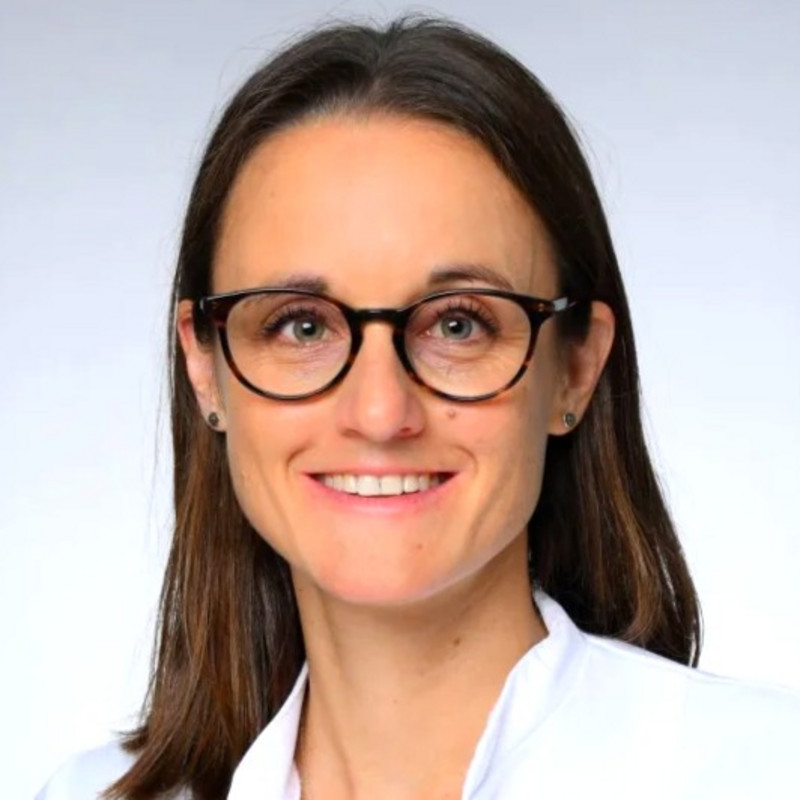
In the newly published study, the research team led by PD Dr. Carolina Rosswog, Awardee at the Career Advancement Program of the CMMC, and Prof. Dr. Matthias Fischer, Principle Investigator at the CMMC, investigated the prognostic accuracy of telomere maintenance mechanisms for risk stratification in children with neuroblastoma compared with current standard-of-care approaches. Telomere maintenance mechanisms enable tumor cells to proliferate indefinitely and represent a hallmark of many cancer types.
→ Who are … - Learn more about CAP Awardee PD Dr. Carolina Rosswog and Principle Investigator Prof. Dr. Matthias Fischer
The findings demonstrate that these biological characteristics are also highly relevant for clinical risk assessment in children with neuroblastoma. Within the large group of non-high-risk neuroblastomas, classification based on telomere maintenance mechanisms reliably distinguished patients with highly favorable outcomes from those with unfavorable disease courses. Importantly, this classification demonstrated significantly greater prognostic accuracy than all currently used prognostic markers and risk classification systems.
“Our findings illustrate how a deeper understanding of tumor biology can be translated into more precise clinical risk assessment,” explains PD Dr. Carolina Rosswog, first author of the study. “Analyzing telomere maintenance mechanisms provides biological information that is not captured by currently established risk factors.” Building on these findings, a national clinical trial is currently being planned to guide individualized treatment decisions based on the telomere maintenance status of patients' tumors. “Our goal is to tailor treatment as precisely as possible to each patient's individual disease risk, improve the chances of cure, and minimize unnecessary treatment-related toxicity and long-term complications,” adds Prof. Dr. Matthias Fischer.
Original Publication:
https://ascopubs.org/doi/10.1200/JCO-26-00742
Carolina Rosswog*, Magdalena Sol Grauer, Fynn Goossens, Andreas Kuckelkorn, Christoph Bartenhagen, Nadine Hemstedt, Yvonne Kahlert, Judith Gecht, Wibke Schumacher, Sophia Gunzer, Jessica Theissen, Lisa Werr, Óscar González-Velasco, Sadaf Shabbir Mughal, Roman Kurilov, Sandra Ackermann, René Schmidt, Benedikt Brors, Frank Berthold, Martin Peifer, Thorsten Simon, Barbara Hero, and Matthias Fischer*, Prognostic Impact of Telomere Maintenance Mechanisms in Neuroblastoma. J Clin Oncol 0, JCO-26-00742, DOI:10.1200/JCO-26-00742
Authors with CMMC affiliation indicated in bold and leading / first authors are indicated with a star (*) .
Scientific Contact:
Prof. Dr. Matthias Fischer
matthias.fischer[at]uk-koeln.de
PD Dr. Carolina Rosswog
carolina.rosswog@uk-koeln.de