
Researchers Discover a New Mechanism for Ensuring Cell Energy Supply
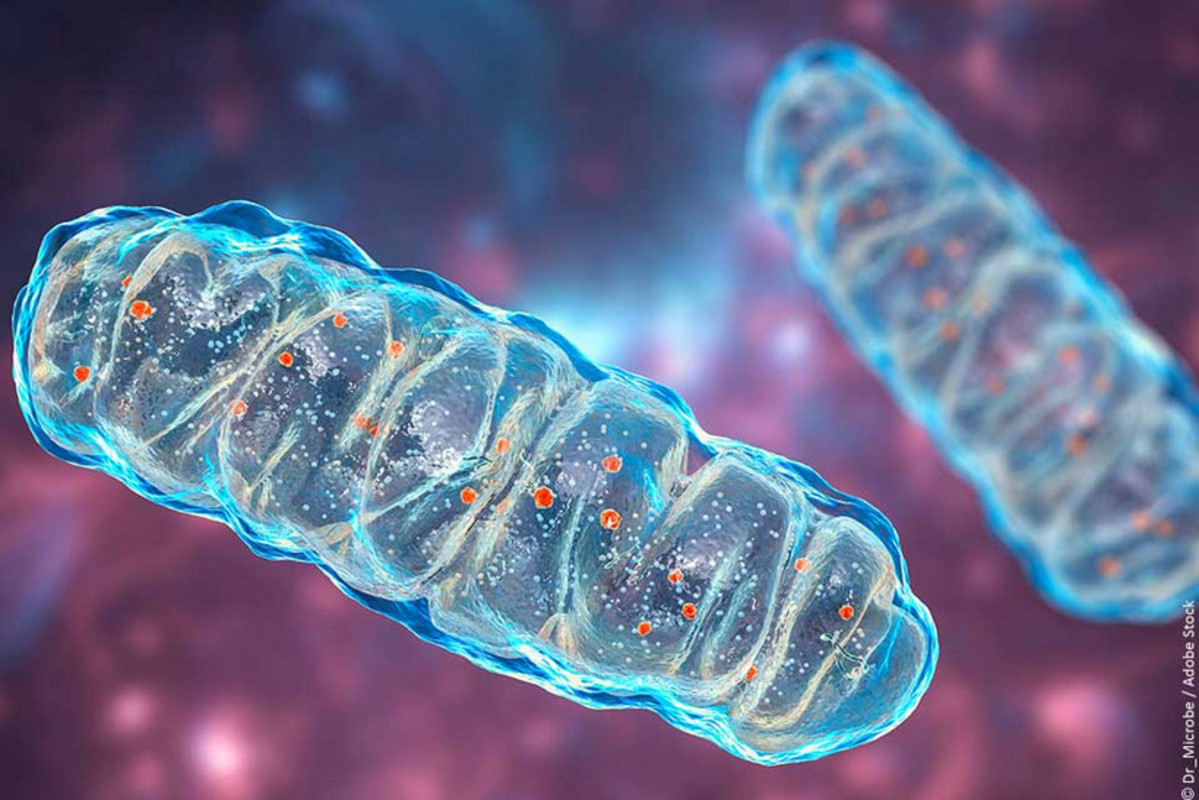

Researchers at the University of Cologne have discovered a previously unknown mechanism that links two fundamental processes in the mitochondria. Mitochondria are the ‘powerhouses of the cell’ and supply the body with energy. The team led by Julia Racho and Dylan Stobbe, under the supervision of Professor Dr Jan Riemer - Institute of Biochemistry at the University of Cologne and Principle Investigator at the Center for Molecular Medicine Cologne (CMMC) -, was able to demonstrate that the oxidative folding of proteins – that is, the process by which proteins acquire their functional three-dimensional structure and additional stabilizing disulphide bonds – is closely linked to the formation of haem. Haem is a vital component of the red blood pigment haemoglobin and is also required for energy production in cells, as well as for many other biological processes. The findings were published in the Science Advances journal under the title “ALR couples IMS redox and heme biosynthesis beyond the disulphide relay” (https://www.science.org/doi/10.1126/sciadv.aed2430).
The study focuses particularly on the enzyme ALR, a protein that enables chemical reactions. It was previously known that ALR keeps another enzyme, MIA40, active. The researchers have now been able to show that ALR performs yet another important function: it stabilizes an enzyme called CPOX, which is responsible for a crucial step in the formation of haem. It is only by way of this stabilization that CPOX can operate reliably. Without it, the enzyme becomes unstable and haem production is thrown out of balance.
As part of this study, the researchers developed a method for detecting proteins that come into direct contact with ALR during the process of their folding. This enabled them to identify CPOX as a direct partner of ALR for the first time. Further experiments showed that, whilst CPOX can also function outside the mitochondria, haem production is significantly less efficient there. At the same time, chemical by-products build up, damaging cells and making them more susceptible to what is known as oxidative stress – a form of cell damage caused by highly reactive oxygen compounds. “Our findings show that oxidative protein folding in mitochondria plays a far greater role than previously thought. Not only does it ensure that proteins adopt their correct shape, but it also directly supports a vital metabolic process,” says lead author Julia Racho.
The discovery also provides new insights into why mutations in the ALR gene can lead to rare inherited mitochondrial disorders in which the cells’ energy supply is disrupted. At the same time, it broadens our existing understanding of the functions of mitochondria: the correct folding of proteins not only serves their own function, but also regulates important metabolic processes. Future studies are now set to investigate whether other enzymes are stabilized in a similar way and what significance this mechanism has for human diseases.
Who is Jan Riemer? - Find out more here
Original Publication:
https://www.science.org/doi/10.1126/sciadv.aed2430
Julia Racho*, Dylan Stobbe*, Jan Jirschitzka, Marijana Croon, Carmelina Petrungaro, Muna Ali, Dario Wernet, Markus Habich, Nele Sophie Gawellek, Julian Strippel, Finn Dicke, Jörn Dengjel, Stephanie Kath-Schorr, Bent Brachvogel, Thomas Langer, Aleksandra Trifunovic, Ines Neundorf, and Jan Riemer*, "ALR couples IMS redox and heme biosynthesis beyond the disulfide relay."Sci. Adv.12, eaed2430(2026) DOI:10.1126/sciadv.aed2430
Authors with CMMC affiliation indicated in bold and leading / first authors are indicated with a star (*) .
Scientific Contact:
Professor Dr Jan Riemer
jan.riemer(at)uni-koeln(dot)de
This message has been modified by the CMMC (K. Heber & D. Grosskopf-Kroiher) and is based on the text by the press and communications team of the University of Cologne (Jan Voelkel, original version here).