
Joining Forces to Combat Chronic Kidney Disease - Three NRW University Hospitals Establish the CEN Network
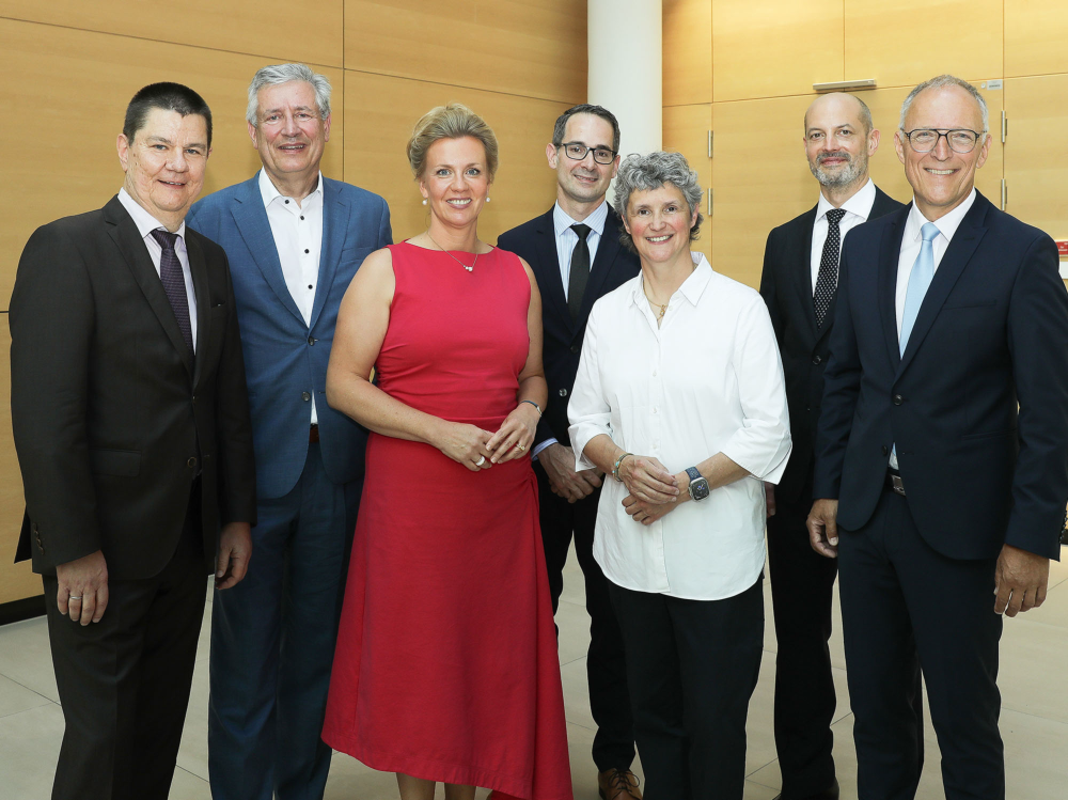
Many will eventually require dialysis, and approximately 7,000 patients are currently waiting for a donor kidney. Kidney disease is a major and increasingly important challenge for Germany’s healthcare system. By establishing the Center of Excellence in Nephrology (CEN), the university hospitals in Cologne, Aachen, and Düsseldorf aim to become a significant part of the solution. A key objective of the initiative is to combine the expertise already available at the three institutions, advance medical research, and rapidly translate scientific findings into routine patient care. Patients will continue to receive treatment at their local centers while benefiting from the collective knowledge generated within the network and from participation in innovative clinical studies.
The CEN was officially inaugurated this week (June 23, 2026) in the presence of Ina Brandes, Minister for Culture and Science of the State of North Rhine-Westphalia (NRW). “The collaboration of three university hospitals is good news for all patients with kidney disease in North Rhine-Westphalia. Through the Center of Excellence in Nephrology, the university hospitals in Cologne, Aachen, and Düsseldorf are pooling their research expertise and making their findings available to all affected patients. World-class research made in NRW and excellent patient care go hand in hand. This benefits both the people of North Rhine-Westphalia and our research and science landscape,” said Minister Brandes.
Given the high and steadily increasing number of people affected, it is surprising that kidney disease receives relatively little public attention, said Professor Dr. Thomas Benzing, Director of the Department of Internal Medicine II at University Hospital Cologne and Chair of the Center for Molecular Medicine Cologne (CMMC). “Kidney disease is on track to become one of the leading causes of death worldwide. We are witnessing a silent epidemic.” According to Prof. Benzing, a network such as the CEN can increase public awareness while contributing to better prevention and treatment through collaborative research. Screening programs, for example, would help identify patients at much earlier stages of disease, when treatment is often more effective.
In addition to the large number of patients affected, Professor Dr. Dr. Rafael Kramann, Director of Medical Clinic II at RWTH Aachen University Hospital, sees the greatest challenge in addressing the many different—and often rare—causes of chronic kidney disease. While scientific understanding of some disease mechanisms has advanced dramatically, the CEN will now bring together expertise across institutions to gain an even deeper understanding of kidney diseases and to develop targeted therapies based on these insights. “The field we are working in is highly complex. By working together as a network, we can be far more successful.”
For Professor Dr. Roman-Ulrich Müller, Director of the Department of Nephrology at University Hospital Düsseldorf, the establishment of the CEN opens up new opportunities for researchers, physicians, and, above all, patients. There have never been so many treatment options available for kidney disease, and the next step is ensuring that these therapies reach patients more broadly. “And where effective treatment options are still lacking, we want to identify a suitable clinical trial with innovative therapeutic approaches for every patient. Patients will benefit from our shared clinical trial center.” Prof. Müller also emphasized that close collaboration between institutions—including the development of a shared data infrastructure—will accelerate learning across the network and ultimately improve care for people living with kidney disease.
Chronic kidney disease (CKD) is one of the most widespread chronic illnesses and is becoming even more prevalent as the population ages. Across Germany, many patients with advanced kidney disease remain underserved and face the risk of progressing to dialysis dependency. Serious cardiovascular diseases are also frequently linked to chronic kidney dysfunction. With the creation of the CEN, North Rhine-Westphalia is establishing a new flagship center for academic medicine and leading-edge nephrology research. The state now has an internationally visible center of excellence that can serve as a model for the field.
The CEN combines the expertise of the university hospitals in Cologne, Aachen, and Düsseldorf. Its focus is nephrology—the study and treatment of kidney diseases—covering everything from molecular disease mechanisms and precision medicine to translational research, innovative clinical trial platforms, and data-driven healthcare structures.
At the same time, the CEN provides a new framework for coordinated clinical networking in rare kidney diseases, cross-site care pathways, and the sustainable preservation and strategic advancement of kidney transplantation programs at the participating university hospitals.
By integrating nephrology with transplantation medicine and research in geriatric medicine, the CEN represents a forward-looking structure for addressing the healthcare challenges of an aging population.
The establishment of the CEN also fulfills several key objectives of the State of North Rhine-Westphalia: pooling university-based excellence, strengthening collaborative high-performance medicine, advancing integrated clinical network structures, establishing a harmonized data infrastructure, and promoting internationally competitive research.
This message has been translated and modified by the CMMC (K. Heber & D. Grosskopf-Kroiher) and is based on the text by the press and communications teams of the University Hospoital Cologne (original German version here).