
Discovery of a new approach for treating fibrosis

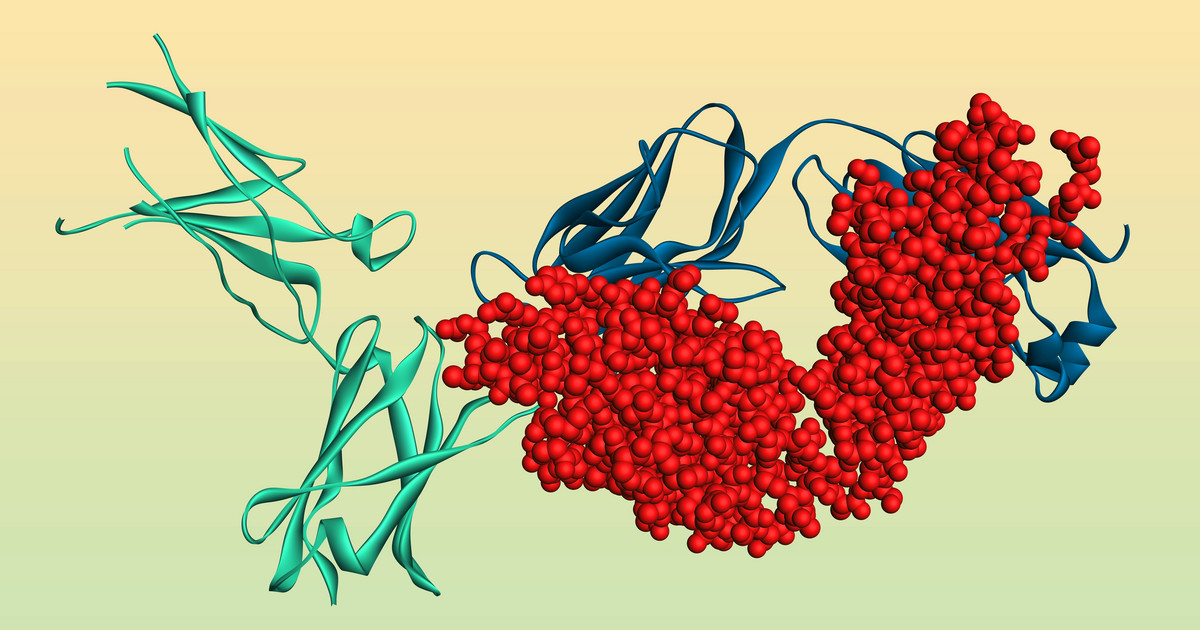

In an Investigator Initiated Trial, researchers have shown that inhibiting the cytokines IL-4 and IL-13 can prevent fibrosis in the skin disease localized scleroderma. These findings could pave the way for the prevention and treatment of other fibrotic conditions. The study “Interleukin 4 receptor-α blockade in localised scleroderma: a phase II proof-of-concept study” was published in the journal Annals of the Rheumatic Diseases.
Fibrotic diseases are common and pose a major challenge for the medical profession. They are also extremely burdensome for those affected. Fibrosis is a pathological condition of the connective tissue, which is characterized by progressive hardening and loss of tissue function. The risk of developing tissue fibrosis increases with age, and in principle any organ can be affected. At present, only a few medications are approved for fibrotic conditions.
Preclinical studies have already shown that the cytokines IL-4 and IL-13 play a crucial role in the development of fibrosis. The interdisciplinary team, led by Professor Dr Sabine Eming, Professor of Dermatology, Director of the Center for Molecular Medicine Cologne (CMMC), and Senior Researcher at the University of Cologne’s CECAD Cluster of Excellence on Aging Research, has now carried out a proof-of-concept study in humans. This type of study involves an early assessment as to whether an active substance works as intended and delivers initial benefits, so that a decision can be made regarding its further development. The results demonstrated that IL-4/IL-13 signalling plays a key role in the inflammatory process leading to fibrosis. Targeted inhibition of this signalling pathway improved the course of the disease in the participants.
Eming and her team investigated the selective inhibition of IL-4/IL-13 signalling in the fibrotic skin condition known as localized scleroderma in a randomized, placebo-controlled clinical trial involving 45 participants. Over a period of six months, the study investigated the effect of a blockade on the course of the disease, on inflammation, and on gene expression. The drug used for this purpose was dupilumab, which inhibits IL-4/IL-13 signalling and is already used as an anti-inflammatory agent in conditions such as neurodermatitis and asthma. Even within this short period, there was a marked clinical improvement over the placebo, a significant reduction in local inflammation, and suppression of fibrosis-associated genes.
“The study findings are very promising for the therapeutic prevention of other fibrotic diseases,” explains Sabine Eming. “Our findings support the need for follow-up studies involving a larger number of patients and a longer duration of treatment in order to validate the efficacy and safety of long-term treatment with dupilumab in patients with localized scleroderma.”
Original Publication:
https://www.sciencedirect.com/science/article/pii/S0003496726006059?via%3Dihub
Sabine A Eming*, Alexander Kreuter, Matthias Hahn, Kamran Ghoreschi, Pia Moinzadeh, Nicolas Hunzelmann, Kerstin Becker, Nils Reiche, Anne Adams, Kija Shah-Hosseini, Martin Hellmich, Sebastian Willenborg, David E Sanin, Martin Röcken*, Thomas Krieg*
Interleukin 4-receptor-α blockade in localised scleroderma: a phase 2 proof-of-concept study, Annals of the Rheumatic Diseases, 2026, ISSN 0003-4967,
DOI:10.1016/j.ard.2026.09.022
Authors with CMMC affiliation indicated in bold and leading / first authors are indicated with a star (*) .
Scientific Contact:
Professor Dr Sabine Eming
sabine.eming[at]uni-koeln.de
This message has been modified by the CMMC (K. Heber & Dr D. Grosskopf-Kroiher) and is based on the text by the press and communications team of the CECAD (Ulrike Doose, original version here).